
Choose your charger. Know what to expect.
A straightforward guide to buying an EV charger and having it installed at your home. Written by our own installers for Cardiff and South Wales homeowners, with no sales pitch.
Local advice. Safe installation. A clear handover.
01 / Choosing your charger
Find the right fit for your home
Start with your car, where you park and how you want to charge. We can help you choose before you buy.
Tethered or untethered?
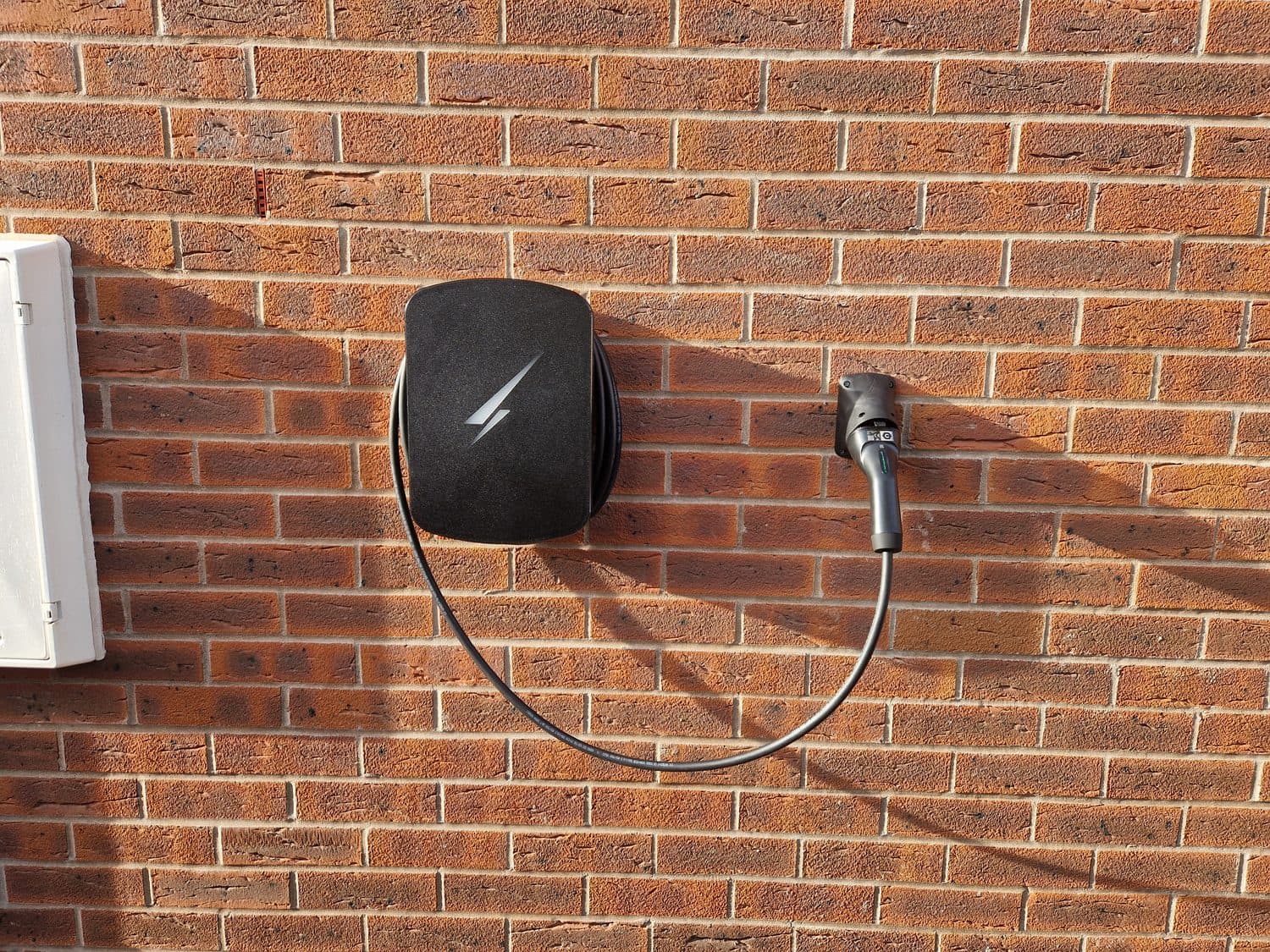
A tethered charger has an attached cable, ready to plug into your car. An untethered charger has a socket and uses a separate compatible charging lead. Consider convenience, appearance and how you will store the cable.
Make sure the cable reaches
Allow for your car's charging port position and how you normally park. The lead should reach comfortably without stretching or creating a trip hazard. Choose the cable length before ordering.
Charging speed: the car matters too
Around 7 kW is a common home charging setup. Actual charging speed depends on the supply, the installation settings and your car's AC charging limit. Higher-power three-phase charging needs a suitable supply and vehicle; it is not a simple upgrade for every home.
Smart features and connection
Think about app control, charging schedules and any solar features you want. Check that your chosen charger and vehicle work with your intended energy tariff. Wi-Fi, mobile data or a wired connection may be used, depending on the model.
Compare the whole package
Ask about the charger model, warranty terms, cable length, electrical works, testing, certification and VAT. An attractive unit price may cover less than a complete installation.
02 / The electrics behind the charger
Why we usually fit an EV board
Your charger needs its own dedicated electrical circuit with protection suited to the charger and your property.
When can we use the existing board?
If your current consumer unit is suitable, has capacity for the new circuit and can accommodate the correct compatible protection, we may be able to use it. A modern-looking board alone is not enough: we check the electrical arrangement first.
What do we check?
We assess the incoming supply, existing demand, earthing and bonding, consumer unit and cable route. We also confirm the protection required for the charger. Any issues affecting the new installation are explained before we agree the work.
Does a separate EV board mean a full house upgrade?
A dedicated EV board does not automatically mean replacing your main consumer unit. Equally, it does not resolve every existing electrical issue. Any necessary remedial work is identified and quoted separately.
What is load management?
Where specified, load management monitors the property's electricity use and adjusts charging to keep demand within the agreed supply limit. It may slow or pause charging while other appliances are using more power.
03 / From enquiry to charging
Your installation, step by step
Most of our straightforward home installations are planned for one working day. We confirm the timing for your property when quoting.
Tell us what you need
Send your vehicle details, postcode, preferred charger position and photos of the supply, consumer unit and cable route. We may arrange a site visit where needed.
Survey and written quote
We assess the electrics, agree the charger position and cable route, and set out the equipment, installation work, price and any extras.
Network checks and planning
We handle the Distribution Network Operator (DNO) application or notification as appropriate. Some supplies need approval or network work before installation; this can affect the booking date.
Install the board, cable and charger
We install the dedicated EV board or use a suitable existing board, run the agreed cable route and mount the charger. Expect a planned interruption to the electricity supply while connections are made.
Test and commission
We inspect and test the new installation, configure the charger and any specified load management, and check its operation. App setup depends on compatible devices and a suitable connection.
Handover and paperwork
We show you the controls and charging schedule, provide an Electrical Installation Certificate and complete applicable Building Regulations notification. We explain how to get help afterwards.
04 / Getting ready
A smooth start to home charging
A few simple preparations help us install and hand over your charger without avoidable delays.
Before installation day
Clear access to the meter, consumer unit, cable route and parking area. Have your phone, app login and Wi-Fi details ready, and arrange any landlord or property-owner permission needed.
Check the connection at the charger position
If your chosen model uses Wi-Fi, check coverage where the charger will be fitted. A booster or a wired data connection may be needed where supported. Additional connectivity work is included only where stated in the quote.
Check what your quote includes
Confirm the board and protection, cable length and route, charger model, testing, paperwork and total including VAT. Check allowances for groundworks, making good, electrical remedials and third-party supply work.
After installation
Keep the certificate and warranty information. Follow the manufacturer's guidance, keep cables tidy and check for damage. If you notice damage or repeated faults, stop using the charger and contact us.
Ready for a quote?
Tell us your vehicle, your parking and the charger you have in mind. We will come back to you with a clear price, usually the same day.
General customer guidance, October 2026. Your agreed quote defines the work included. Technical background: IET EV charging guidance, Energy Saving Trust and Energy Networks Association.